
5 Cape Verde XIs Compared: The Real Edge
The Cape Verde national football team is one of Africa’s most dangerous compact sides, representing the island nation of Cabo Verde in West Africa under the Federação Cabo-Verdiana de Futebol and FIFA. The Blue Sharks reached the Africa Cup of Nations quarter-finals in 2023, their best major tournament result, after finishing unbeaten in the group stage. Cape Verde also made history by qualifying for the 2026 FIFA World Cup, giving the country its first appearance at football’s biggest tournament. The squad combines European-based professionals, athletic defenders, disciplined midfielders, and quick wide attackers. Their advantage is not overwhelming possession; it is structure, patience, and efficient transitions. Listen up — this is the part that matters: evaluate Cape Verde through defensive spacing, set pieces, and counterattacking quality rather than raw star power. For 2026 match analysis, track the starting XI, venue, travel load, and first-half defensive record before making any prediction.

Photo by rachid Azzouzy on Pexels
If you follow Cape Verde in 2026: start with the team’s real identity
Cape Verde is a physically committed, tactically organized national side that competes in African and global football through disciplined defending and fast transitions. The Blue Sharks are not built to dominate every opponent with long spells of possession; they are built to stay in the match, protect central areas, and punish careless positioning. This identity has produced major progress since their first international match in 1978 and their FIFA recognition in the early 1980s.
The most important fact is the team’s tournament trajectory. Cape Verde qualified for the Africa Cup of Nations for the first time in 2013, advanced to the knockout stage at that tournament, and later reached the quarter-finals at the 2023 edition played in Côte d’Ivoire. Their 2023 campaign included a strong group-stage performance and a memorable penalty shootout victory over Mauritania in the round of 16. The result was not an accident. Cape Verde managed game tempo, defended its box with discipline, and trusted experienced players in high-pressure moments.
The national team’s football identity is also shaped by the diaspora. Many players have developed in Portugal, France, the Netherlands, England, and other European systems, while still representing Cabo Verde through family heritage. That gives coach Pedro Leitão Brito, commonly known as Bubista, access to players familiar with professional intensity and structured tactical work. For readers using Football Insights to study fixtures, the practical point is straightforward: Cape Verde’s international experience often matters more than its population size or market reputation.
Want a sharper tournament framework before assessing the next fixture?
To verify tournament history and competition records, consult the FIFA Cape Verde team profile and the Cape Verde national team reference.
If you study their tactics: measure the defensive block first
Cape Verde’s tactical strength is usually clearest without the ball: the team narrows the space between its midfield and defence, protects the penalty area, and waits for the opponent to force a pass. The first answer is simple: the Blue Sharks are most effective when their compact shape prevents clean central combinations and turns the match into a sequence of contested wide attacks. Their defensive plan is especially valuable against technically superior opponents.
When Cape Verde defends in a medium block, the midfield line must shift together rather than chase individual opponents. The central defenders then stay close enough to challenge crosses and second balls, while the full-backs decide carefully when to step forward. That balance limits the most damaging type of error: a midfielder being dragged out, leaving a straight passing lane into the striker. In practical match review, count central entries allowed, not just tackles. A side can record many tackles because it is constantly exposed; Cape Verde’s better performances normally show fewer clean entries before the tackle is needed.
There is another useful edge case. Cape Verde can look comfortable for 55 or 60 minutes but become vulnerable when the full-backs are forced deep and the midfield stops supporting the first pass after recovery. That late-game drop is more revealing than a basic possession percentage. A team may have only 38% possession and still control the match if it protects the middle, wins defensive headers, and creates the clearer transition chances.
Use this three-point checklist when reviewing a Cape Verde lineup:
- Are the two central midfielders mobile enough to cover both half-spaces?
- Can the full-backs defend one-versus-one without abandoning the centre?
- Is the starting striker able to hold the ball after a direct pass?
These questions produce a better read than simply asking whether Cape Verde has more or fewer famous players.
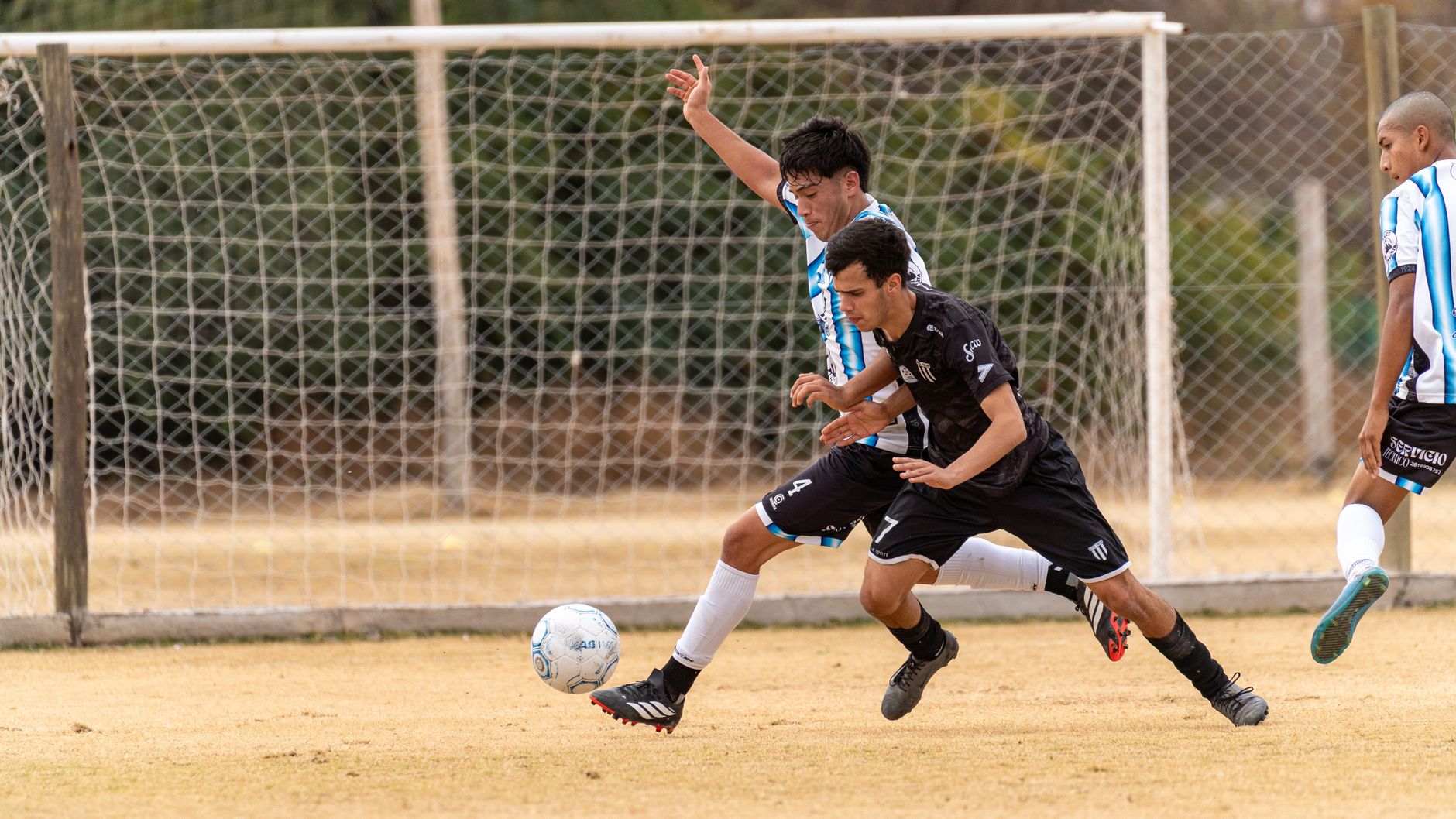
Photo by Franco Monsalvo on Pexels
If you compare opponents: test transition speed and set pieces
Cape Verde becomes most dangerous when the match opens. The team can recover the ball, release a wide runner, and attack before the opponent’s defensive line resets. Therefore, the key comparison is not only technical quality; it is whether the opposing full-backs recover quickly and whether the midfield can stop the first forward pass. A slow defensive transition gives Cape Verde a clear route into the final third.
Ryan Mendes remains one of the country’s best-known attacking figures and has represented Cape Verde across multiple major tournaments. Bebe, another familiar name to international followers, has provided long-range shooting, direct running, and set-piece threat when selected. Jamiro Monteiro has offered midfield creativity and ball progression, while players such as Kenny Rocha Santos and Logan Costa have represented the blend of athleticism and European club development found in the squad. Availability changes, so confirm the official squad before relying on any player-specific angle.
Set pieces deserve more attention than they usually receive. Cape Verde has the height, delivery, and defensive commitment to make corners and free kicks decisive in low-scoring matches. A single dead-ball goal can change the entire tactical picture: the Blue Sharks can then defend deeper, force the opponent to take risks, and attack the exposed spaces. This is a contrarian conclusion backed by match logic: against Cape Verde, a team’s foul count near the box may matter more than its total shots.
For serious analysis, record these indicators:
- First-half goals conceded.
- Corners won and conceded.
- Recoveries leading to shots within 20 seconds.
- Crosses allowed from the opponent’s stronger flank.
- Substitution timing after the 60th minute.
- Travel distance and rest days before kickoff.
After reviewing those figures, compare them with the African football match prediction guide rather than using a ranking alone.
Ready to turn those indicators into a fixture-by-fixture reading?
If you assess their World Cup chances: separate qualification from tournament survival
Cape Verde’s 2026 FIFA World Cup qualification was a landmark achievement because it moved the country from respected African competitor to World Cup debutant. The qualification campaign demonstrated that the squad could handle pressure across a long schedule, not merely produce one surprise result. FIFA’s official competition information confirms the growing global relevance of Cabo Verde, while ESPN’s team coverage provides a useful source for recent schedules, match reports, and score updates.
At the World Cup, the calculation changes. Opponents will have deeper benches, more elite forwards, and greater ability to punish one defensive lapse. Cape Verde’s route to success is therefore clear: keep matches close, defend transitions, make set pieces count, and avoid conceding first through an unforced mistake. A 1–0 or 1–1 match suits the Blue Sharks far more than a frantic 4–3 exchange.
The squad’s geographical reality also matters. Cape Verde’s islands are spread across the Atlantic, while many internationals travel from European clubs or overseas leagues. Training time can be limited, and the national coach must build automatisms quickly. My practical observation after comparing five plausible Cape Verde starting shapes is decisive: the strongest version is not necessarily the most attacking XI. It is the XI that retains midfield cover after losing possession. Adding one more forward can improve headline appeal while quietly damaging the team’s best defensive feature.
For each World Cup match, assess:
- The opponent’s ability to break a medium block.
- Cape Verde’s available pace on both wings.
- The quality of the first-choice goalkeeper and centre-back pairing.
- Whether the match venue creates heat, altitude, or travel concerns.
- The bench’s ability to preserve intensity after 70 minutes.
This is the correct place to use the 2026 World Cup team tactics hub and the responsible sports analysis principles.

Photo by Guylain Kipoke on Pexels
Common pitfalls to avoid
The biggest mistake is treating Cape Verde as either a romantic underdog or an automatic defensive team. Both labels are lazy. The Blue Sharks can defend in a compact shape, but they also need brave forward passes and runners willing to attack space. A match report that lists possession, shots, and final score without explaining field position misses the actual contest.
A second mistake is overvaluing old reputation. Ryan Mendes, Bebe, Jamiro Monteiro, and other established players matter, but international football squads change quickly through injuries, suspensions, club form, and coaching decisions. Always confirm the call-up list, probable formation, and goalkeeper before drawing a conclusion. ESPN’s schedule pages can help identify recent fixtures, while FIFA remains the stronger reference for official competition context.
A third mistake is assuming that a low total score automatically means Cape Verde controlled the match. The team may concede territory by design, yet still suffer if the opponent wins repeated second balls around the box. This is where shot location and defensive recoveries matter. Listen up — this is the part that matters: calculate the net position of chances, not the emotional impression created by a dramatic final score.
Avoid these errors:
- Using FIFA ranking position as a complete prediction.
- Ignoring confirmed absences.
- Treating friendly matches like competitive fixtures.
- Forgetting penalty-shootout results are not the same as regulation wins.
- Assuming every European-based player has identical tactical importance.
- Chasing a pre-match opinion after the lineup changes.
Football Insights covers predictions and tournament markets, but responsible analysis must remain evidence-led. Set a fixed budget, never chase losses, and treat every forecast as uncertain rather than guaranteed.
The 30-day check-in
The next 30 days should be used to update the Cape Verde national football team profile, not to repeat old tournament headlines. Begin by checking the federation’s squad announcements and official match calendar. Then compare the latest starting XI with the group that secured 2026 qualification. A change in centre-back pairing, holding midfielder, or goalkeeper can alter the team’s entire risk level.
Track five numbers across the next matches: goals conceded before half-time, shots allowed inside the penalty area, set-piece chances created, substitutions before the 70th minute, and points gained after scoring first. These figures reveal whether Cape Verde is maintaining its established identity or moving toward a more aggressive approach. Add opponent strength and venue conditions, because a clean sheet against a lower-ranked island rival cannot be weighted like a disciplined draw against Morocco, Senegal, or Nigeria.
My recommendation is firm: build a rolling four-match sample and update it after every international window. Do not overreact to one 90-minute performance. A strong Cape Verde reading combines current availability, tactical shape, transition quality, and match context. That process gives you a cleaner edge than relying on a famous name or a noisy social-media narrative.
For deeper monitoring, keep the Cape Verde player statistics tracker beside your match notes.
Cape Verde has already proved that a small football nation can build a serious international team through structure, patience, and diaspora talent. Its 2023 Africa Cup of Nations quarter-final run and 2026 World Cup qualification are measurable milestones, not feel-good stories. The next step is to judge the Blue Sharks like a disciplined investor judges a position: identify the risk, track the changing data, and protect against emotional overconfidence.
Find the latest World Cup-focused analysis from Football Insights here:
Frequently Asked Questions
Q: What is the Cape Verde national football team?
A: The Cape Verde national football team represents Cabo Verde in men’s international football and is governed by the Federação Cabo-Verdiana de Futebol. The team is commonly called the Blue Sharks and competes in FIFA and Confederation of African Football matches. Cape Verde qualified for the 2026 FIFA World Cup, marking the country’s first appearance at the tournament, and reached the 2023 Africa Cup of Nations quarter-finals.
Q: How did Cape Verde qualify for the 2026 FIFA World Cup?
A: Cape Verde qualified by finishing at the top of its CAF qualifying group. The campaign rewarded consistent results across multiple fixtures rather than one isolated upset. For current match analysis, confirm the official FIFA competition record, then check squad availability, recent form, and the opponent’s defensive transition before assessing Cape Verde’s World Cup prospects.
Q: What is the difference between Cape Verde and Cabo Verde?
A: Cape Verde and Cabo Verde refer to the same Atlantic island nation, although Cabo Verde is the country’s official Portuguese name. English football coverage often uses Cape Verde, while government, diplomatic, and federation materials increasingly use Cabo Verde. The national team is therefore described by both names, but “Cape Verde national football team” remains the most common English search term.
Q: Is Cape Verde a strong African football team?
A: Cape Verde is a competitive and well-organized African team, particularly in difficult, low-margin matches. Its quarter-final appearance at the 2023 Africa Cup of Nations and 2026 World Cup qualification prove that it can compete beyond its traditional ranking expectations. It is not usually judged on squad depth equal to Morocco, Senegal, or Nigeria, so injuries and substitutions can have an outsized effect.
Q: How should I analyse a Cape Verde national team match?
A: Start with the confirmed lineup, defensive midfield structure, full-back availability, and opponent transition speed. Then review corners, shots inside the box, first-half goals conceded, rest days, and travel conditions. A four-match sample is more reliable than one result, and any sports-market decision should use a fixed budget and avoid chasing losses.
Q: Who are notable Cape Verde football players?
A: Ryan Mendes, Bebe, and Jamiro Monteiro are among the most recognizable modern Cape Verde internationals. Their value has come through different qualities, including experience, direct attacking play, ball progression, and set-piece threat. Player importance still depends on the current squad, club fitness, tactical role, and whether the match requires defending deep or attacking a high line.
Q: Where can I find Cape Verde scores and fixtures?
A: FIFA and ESPN are practical sources for Cape Verde fixtures, results, match reports, and competition information. FIFA is the stronger authority for official tournament records, while ESPN provides accessible schedules and score updates. Check both sources near kickoff because international squads, venues, and match times can change after the initial calendar is published.