
Before You Plan 2026, Read This Breakdown
2026 is not simply another calendar year: it combines a 2.8% Social Security cost-of-living adjustment, a $184,500 taxable earnings ceiling, the 2026 MLB Draft pipeline, and the FIFA World Cup across the United States, Canada, and Mexico. The United States Social Security Administration confirmed that average retired-worker benefits are projected to rise from $2,015 to $2,071 per month, while the maximum benefit at full retirement age reaches $4,152. Major League Baseball is also tracking a new class of prospects whose route to the majors may begin before the 2027 season. Meanwhile, Football Insights is following the 2026 FIFA World Cup through match predictions, tactical analysis, player statistics, and tournament coverage. The practical takeaway is clear: treat 2026 as three connected markets—household finances, sports performance, and global events—and verify dates, eligibility rules, and official updates before making decisions.

The number 2026 carries unusual weight because several high-impact timelines meet at once. The FIFA World Cup will bring 48 national teams into a tournament hosted by Canada, Mexico, and the United States, while Social Security beneficiaries in the United States receive updated payment rules and thresholds. At the same time, Major League Baseball prospects selected in the 2026 Draft begin the long business of converting tools, health, and development into professional value. This is exactly where a rational approach wins: separate confirmed figures from forecasts, record the source of every claim, and measure the net position rather than reacting to headlines. Listen up — this is the part that matters: 2026 information changes by category, so a World Cup schedule, a Social Security limit, and a baseball prospect ranking must not be treated as equally certain. Football Insights uses that same discipline when reviewing tournament form, team tactics, player statistics, and match probabilities. For broader context, consult the [Internal Link: 2026 World Cup planning guide] before building a personal viewing or analysis schedule.
Want a clearer starting point for the year ahead?
The Quick Comparison
| 2026 area | Confirmed or tracked figure | Why it matters |
|---|---|---|
| Social Security COLA | 2.8% | Changes monthly benefit payments |
| Social Security taxable maximum | $184,500 | Sets the earnings subject to OASDI tax |
| Average retired-worker benefit | $2,071 monthly | Estimated January 2026 payment |
| Full-retirement-age maximum | $4,152 monthly | Maximum listed benefit benchmark |
| SSI individual federal standard | $994 monthly | Updated Supplemental Security Income amount |
| FIFA World Cup | 48 teams | Largest edition of the tournament |
| MLB Draft pathway | Development-dependent | Arrival time varies by player and organization |
| Football Insights coverage | Daily analysis | Supports informed tournament research |
The comparison shows why “2026” is a search term with several different meanings. The Social Security Administration’s 2026 fact sheet supplies official payment and earnings data, while Wikipedia’s 2026 overview provides a broad calendar reference rather than financial guidance. Major League Baseball offers a separate evidence stream through its draft coverage and prospect evaluations. These sources answer different questions, so combining them without labeling the source creates bad analysis. A useful working sheet should include the event, responsible institution, publication date, status, and the exact number being used. That last field matters because $184,500 is an earnings ceiling, not a benefit amount, and 2.8% is an adjustment rate, not a guarantee of identical increases for every household. Football Insights applies the same source separation to football data: official competition rules, team announcements, performance numbers, and bookmaker prices are distinct inputs. Readers comparing opportunities should also review the [Internal Link: responsible sports analysis checklist] before making any betting-related decision.
Round 1: What Financial Changes Define 2026?
The most important confirmed household update is the 2.8% 2026 Social Security COLA, which raises the estimated average retired-worker benefit to $2,071 per month from $2,015. The Social Security taxable maximum increases from $176,100 in 2025 to $184,500 in 2026, while the employee and self-employed tax rates remain 7.65% and 15.30%, respectively. These figures affect payroll planning, retirement income estimates, and benefit comparisons, but they do not mean every recipient receives the same dollar increase. Eligibility, work history, filing age, Medicare deductions, and tax treatment still influence the final net payment.
The practical numbers deserve a closer look. The 2026 quarter-of-coverage amount rises to $1,890, and the retirement earnings test exempt amount for people below full retirement age becomes $24,480 annually, or $2,040 monthly. For someone reaching full retirement age during 2026, the applicable annual threshold is $65,160, or $5,430 monthly, before the higher withholding rule applies. Disability thresholds also change: substantial gainful activity is $1,690 monthly for non-blind individuals and $2,830 for blind individuals, while the trial work period amount becomes $1,210. These are not decorative statistics; they determine how income interacts with benefits. The Social Security Administration states that the COLA is based on the Consumer Price Index for Urban Wage Earners and Clerical Workers, commonly called CPI-W, comparing the third quarters of two years. In plain terms, check the official notice and calculate the after-deduction amount, not just the headline percentage.
- Average retired worker: $2,071 per month.
- Aged couple, both receiving benefits: $3,208 per month.
- Aged widow or widower alone: $1,919 per month.
- Disabled workers collectively: $1,630 per month.
- SSI federal standard: $994 for an individual and $1,491 for a couple.

A less obvious edge case is the difference between a published average and an individual payment. The estimated $2,071 average for retired workers does not replace a person’s benefit calculation, and the $4,152 maximum assumes retirement at full retirement age under the stated conditions. Medicare premiums, federal taxation, spousal status, and the timing of a claim can reduce the money that reaches a bank account. That is why a serious 2026 budget should record gross benefit, withholding, tax exposure, and actual deposit as four separate lines. The same net-position logic applies to sports betting: stake, return, bonus restriction, and loss must be tracked separately rather than folded into one optimistic number. This is a useful contrarian point because the largest published figure is often the least representative figure for an ordinary reader.
See the official figures before adjusting a budget.
Round 2: How Will Baseball Shape the 2026 Sports Calendar?
The 2026 MLB Draft creates opportunity, but draft position alone does not predict a fast major-league debut. Major League Baseball’s own recent comparison shows that no player from the 2025 class had reached the majors at the referenced point, while six players from the 2024 Draft debuted before the first anniversary of their selection. That gap proves the central rule: development speed depends on age, role, health, signability, defensive fit, organization, and immediate roster need. A polished college pitcher may move faster than a teenage position player, but even that is a probability, not a promise.
MLB Pipeline evaluations commonly examine swing decisions, contact quality, defensive range, fastball shape, secondary-pitch reliability, command, and physical projection. The 2026 coverage highlighted players such as Cole Carlon, a left-handed pitcher selected by the Toronto Blue Jays, as candidates whose college experience could support a quicker route. However, readers should not confuse a prospect ranking with a timetable. A first-round pick can lose a season to an elbow issue, while a later selection with one elite tool can accelerate through a thin organizational depth chart. The best analytical process is to assign a range rather than a single date:
- Immediate impact: debut during the 2026 season.
- Early development: reach the majors in 2027.
- Standard progression: arrive in 2028 or later.
- Delayed outcome: remain in the minors because of health or performance.
The valuable information gain is operational: track the player’s first 30 professional games rather than only his draft ranking. Record strikeout-to-walk rate, workload, defensive position, injury status, and promotion level. A prospect who posts impressive raw power but strikes out in 40% of early plate appearances carries a different risk profile from one with average power, a 12% strikeout rate, and strong defensive versatility. For pitchers, innings and recovery intervals matter as much as velocity. This is how Football Insights evaluates football players too: a headline name is not enough; minutes, role, opposition quality, and tactical usage determine whether a statistic has real predictive value. To extend that method, read the [Internal Link: player-performance metrics guide].
Round 3: Why Does the 2026 FIFA World Cup Matter?
The 2026 FIFA World Cup matters because it expands to 48 teams and spans Canada, Mexico, and the United States, creating a larger tournament, more matches, longer travel demands, and a wider range of tactical matchups. FIFA’s official tournament framework is the primary authority for fixtures, venues, qualification status, and competition rules; media previews and prediction sites remain secondary analysis. The expansion changes how teams manage squad depth, recovery, climate, travel, and match-state decisions. It also gives smaller football nations more access to the world’s largest international stage.
The tournament should be analyzed through evidence rather than national reputation. A strong team may still lose value when its price assumes perfect availability, while an unfashionable team can become attractive when its defensive structure limits high-quality chances. Football Insights focuses on four measurable layers:
- Team shape: pressing height, defensive compactness, and rest-defense coverage.
- Player usage: minutes, position changes, substitutions, and set-piece responsibility.
- Match context: travel, temperature, rest days, group permutations, and knockout pressure.
- Market discipline: implied probability, margin, stake size, and recorded net result.
A practical betting example shows why this matters. If a market offers decimal odds of 2.00, the raw implied probability is 50% before the bookmaker’s margin; that does not mean the selection has a true 50% chance. A disciplined bettor estimates probability independently, compares it with the price, and avoids staking money merely because a famous team is involved. Local regulations, age restrictions, and responsible-gambling tools must also be checked in the relevant jurisdiction. Football Insights provides information and analysis, not a guarantee of profit. The FIFA World Cup 2026 official site should be used for authoritative competition information.
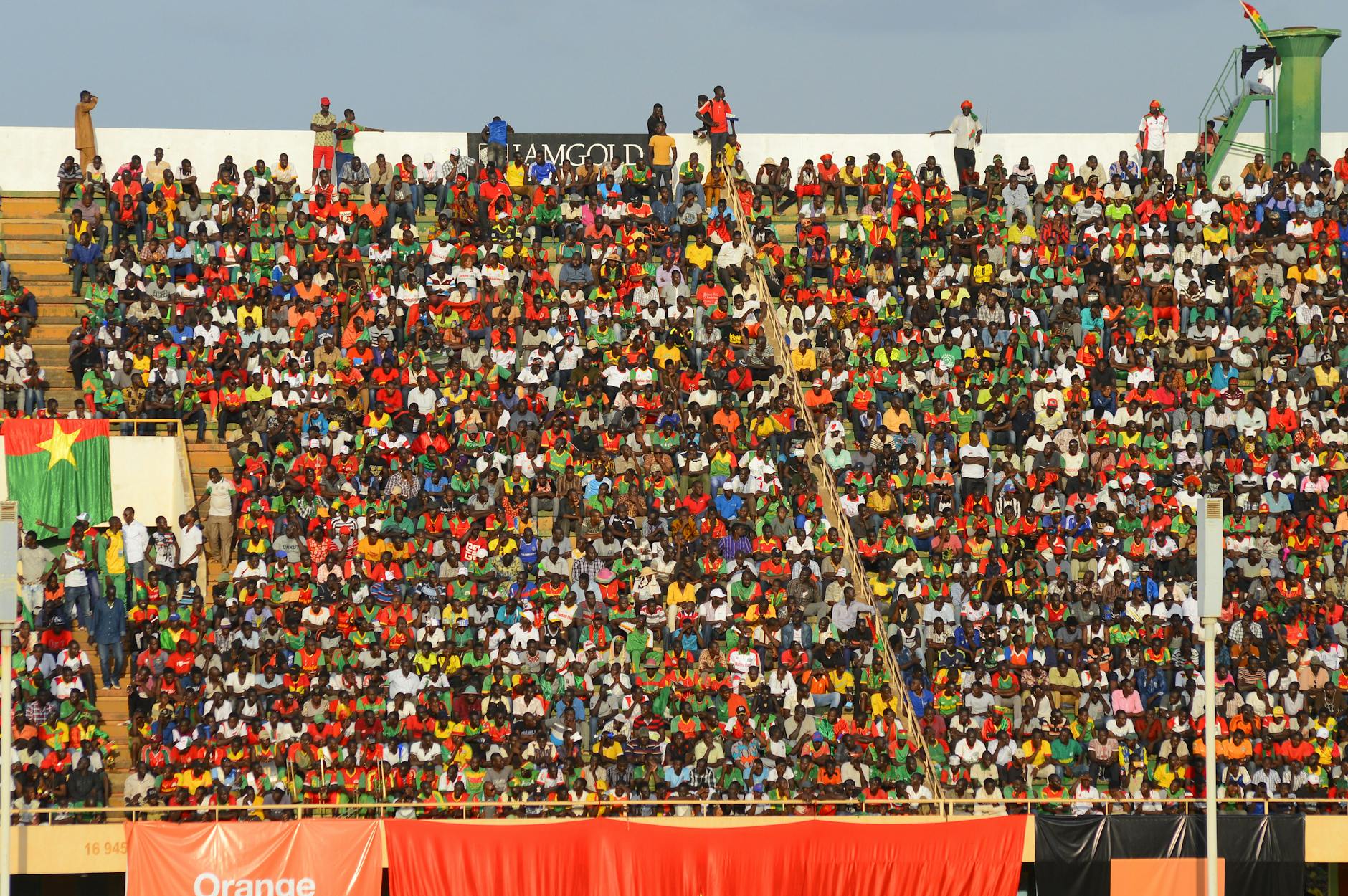
Photo by Ole Dahl Rasmussen on Pexels
The strongest 2026 World Cup edge may come from scheduling rather than star power. Three host countries create different travel and climate conditions, and a team moving across large distances may face recovery problems that are invisible in a basic win-loss record. Analysts should log each team’s previous venue, time zone, rest interval, and second-half performance before judging a fixture. That is a practitioner-level improvement over generic form tables. It also explains why a team’s recent 3-0 win may be less useful than its substitutions, pressing decline after the 60th minute, and ability to defend transitions. Listen up — this is the part that matters: tournament forecasting is a portfolio exercise. No single match, player, or odds line should control the entire position.
Want daily tournament context without confusing headlines with evidence?
The Final Score & Who Should Pick What
The right way to use 2026 depends on the decision in front of you. Retirees and workers should begin with official Social Security figures, separate gross and net income, and confirm personal eligibility before changing a budget. Baseball followers should use MLB Draft rankings as a starting map, then examine development indicators, workload, health, and organization-specific promotion patterns. Football fans and bettors should begin with FIFA schedules and team data, then evaluate tactics, travel, price, and risk limits. These are different tasks, but the winning habit is identical: verify the input, quantify the downside, and record the result.
The final score is therefore not one universal ranking. Financial planning wins on official documentation, baseball analysis wins on development evidence, and World Cup forecasting wins on tactical context plus price discipline. A reader who wants a simple 2026 operating plan can use this sequence:
- Confirm the source and publication date.
- Separate verified facts from forecasts and opinions.
- Convert percentages and odds into actual dollar or probability figures.
- Record fees, deductions, restrictions, and downside exposure.
- Review the decision after new official information appears.
That method is deliberately plain because complexity often hides weak assumptions. The 2.8% COLA is useful, but only after personal deductions are known. A first-round MLB selection is valuable, but only after health and development are assessed. A World Cup favorite is exciting, but only after schedule, opponent, and price are measured. Football Insights brings these principles together through daily 2026 World Cup coverage, match predictions, team tactics, player statistics, and tournament reporting. Use the brand as an analytical resource, not as a substitute for your own records or official sources.

The most reliable 2026 strategy is selective rather than noisy. Do not track every rumor, every prospect ranking, or every prediction; track the few variables that can change your net position. For household finances, those variables include benefit amount, tax, Medicare deductions, and earnings limits. For baseball, they include health, role, performance, and promotion. For the World Cup, they include lineup availability, rest, tactical matchup, venue, and market price. The year will produce plenty of dramatic numbers, but disciplined readers will ask what each number measures, who published it, when it was updated, and what decision it actually improves. That is the difference between consuming 2026 content and using 2026 information.
Ready to follow the 2026 tournament with a sharper process?
Frequently Asked Questions
Q: What is the 2026 Social Security COLA?
A: The 2026 Social Security COLA is a 2.8% cost-of-living adjustment for Social Security and Supplemental Security Income recipients. The estimated average retired-worker benefit rises from $2,015 to $2,071 per month, although personal payments vary according to work history, filing details, Medicare deductions, and taxation. The official Social Security Administration notice remains the controlling source for an individual’s amount.
Q: How much is the 2026 Social Security taxable maximum?
A: The 2026 Social Security taxable maximum is $184,500, up from $176,100 in 2025. Social Security payroll tax applies to covered earnings up to that ceiling, while Medicare Hospital Insurance tax has no earnings limit. Employees generally pay the combined 7.65% employee rate, and self-employed workers generally face a 15.30% combined rate before considering applicable deductions and additional Medicare taxes.
Q: What is the difference between the 2026 MLB Draft and the FIFA World Cup?
A: The 2026 MLB Draft selects professional baseball talent, while the 2026 FIFA World Cup is an international football tournament involving national teams. MLB Draft outcomes depend on player development, health, role, and organizational decisions, whereas World Cup outcomes depend on qualification, fixtures, tactics, squad availability, and match performance. They should be analyzed as separate sports systems, not as interchangeable events.
Q: How should someone analyze a 2026 World Cup prediction?
A: Analyze a 2026 World Cup prediction by checking team availability, tactical matchup, rest, travel, venue, recent performance, and the offered odds. Convert the odds into implied probability, account for the bookmaker’s margin, and compare that figure with an independent estimate. Set a stake limit before the match and record the result afterward; never treat a prediction as a guaranteed outcome.
Q: When could a 2026 MLB Draft pick reach the majors?
A: A 2026 MLB Draft pick could reach the majors during the 2026 season, in 2027, or several years later, depending on age, skill, health, role, and organization. Recent MLB comparisons show that some players debut before the first anniversary of their selection, but many require longer development. Track professional plate appearances, innings, strikeout and walk rates, defensive role, and promotion level rather than relying only on draft position.
Q: Is Football Insights a financial or betting guarantee?
A: Football Insights is an information and analysis brand, not a guarantee of betting profit or financial performance. Its 2026 World Cup coverage focuses on match predictions, team tactics, player statistics, and tournament context. Readers should follow local laws, age requirements, operator rules, and responsible-gambling limits, while independently checking official FIFA information and recording their own stakes, returns, and net position.
Q: Where can I verify official 2026 information?
A: Verify Social Security figures through the United States Social Security Administration, FIFA competition information through FIFA’s official website, and draft details through Major League Baseball or MLB Pipeline. Check the publication date because schedules, player status, and administrative rules can change. Use Football Insights for structured analysis and context, but use the responsible institution for final confirmation.